by Brian Swerdlow
Indexed Universal Life (IUL) insurance continues to gain popularity as a versatile financial product. IUL offers flexibility, tax advantages, and potential retirement income. However, as with any investment or insurance product, there are benefits and drawbacks to consider, particularly for federal employees planning for retirement. In this article, we’ll take a look at some of the pros and cons of IUL and how it may fit into a federal employee’s retirement strategy.
The Basics of Indexed Universal Life Insurance
Before deciding whether IUL is the right choice for you, it’s essential to understand its structure. IUL is a type of life insurance offering both a death benefit and a cash value account. This cash value component is linked to the performance of a stock market index like that of the S&P 500). An IUL policyholder’s cash value can grow based on the index’s returns. IULs also have minimum guarantees that protect against loss. However, although IUL can offer flexibility in premium payments and cash value accumulation, it’s not necessarily a one-size-fits-all product.
Pros of Indexed Universal Life Insurance
You have the potential to create tax-free retirement income.
One of the obvious attractions of IUL is its potential to create tax-free retirement income. Policyholders can access the cash in an IUL through loans or withdrawals without triggering taxable events, providing a reliable stream of income that isn’t subject to market fluctuations. This feature can be particularly valuable for government employees looking for a tax-efficient supplement to their pensions or Thrift Savings Plan (TSP).
You could use IUL to save for college tuition.
You can also use an IUL policy’s cash value as a savings vehicle for future education expenses. The tax-deferred growth and accessibility of funds allow parents to save for their children’s college tuition while avoiding the penalties associated with other tax-advantaged savings accounts like 529 plans.
An IUL can fund self-financing through the mechanism of “infinite banking.”
IUL policies can be structured to allow policyholders to borrow against their cash value, effectively allowing the policyholder to become their own source of financing. This concept, known as “infinite banking,” provides liquidity for large purchases or emergencies. Borrowing against your policy’s cash value could save on interest costs and keep other retirement funds intact.
IULs may be helpful in estate planning.
The death benefit associated with IUL can be an effective tool for estate planning, providing financial security for beneficiaries in the form of an instant legacy. Your policy’s tax-free payout can cover final expenses and estate taxes and eliminate probate delays.
There are no IRS penalties for early withdrawals from an IUL
Unlike 401(k) or IRA accounts, IUL policies allow for withdrawals without facing early withdrawal penalties, providing greater flexibility and access to funds when you need them, regardless of your age.
IULs are a stable “tier 1” capital asset.
An IUL is considered a Tier 1 capital asset, which means it is highly stable. This designation, often used by banks and corporations for their reserves, underscores the policy’s long-term financial reliability.
IULs provide “living benefits.”
In addition to the death benefit, IUL insurance often has “living” benefits. These are special benefits that may let you access the cash value for health or long-term care needs while still alive. Living benefits give you an added layer of financial security.
But IULs may have some downsides, too.
IULs may be a bit complicated.
Compared to other types of life insurance, IUL policies are somewhat complicated. They typically contain many moving parts, such as caps, participation rates, and indexing strategies. Understanding the nuances associated with IUL insurance can be a challenge, and it is often difficult to evaluate the policy’s suitability or compare it with other financial products.
There’s a risk the policy’s growth may underperform.
While IUL offers the potential for cash value growth linked to a market index, participation rates, and caps can limit upside potential. When there are market downturns, cash value growth could stagnate or fail to meet expectations, even with floor guarantees.
IUL sales tactics can be misleading.
Some agents may emphasize non-guaranteed elements, such as projected cash value growth, without adequately explaining the risks. You must understand that illustrated performance may not match real-world results and avoid any unrealistic expectations.
IULs can have higher administrative fees.
Compared to other life insurance products, IUL policies often carry higher fees, including policy charges and administrative costs. These fees can erode the cash value and affect the policy’s overall performance. Be sure your IUL expert explains every fee to you and gives you an idea of how those fees might impact your policy’s value.
An IUL is not something you can set and forget.
IUL policies are not “set-it-and-forget-it” products. Policyholders must stay engaged with the policy’s performance, adjusting as necessary to optimize participation rates and cash value growth. Failure to do so could negatively affect the policy’s long-term viability.
The IUL underwriting process can be burdensome.
IULs often require more extensive underwriting than other kinds of insurance and financial products. When you apply for IUL, you can expect to undergo medical evaluations and financial assessments. Depending on what is uncovered by these health and lifestyle evaluations, you may find getting coverage at a favorable rate is challenging.
Can IUL fit into a government employee’s retirement plans?
For federal employees, IUL could serve as a valuable supplement to existing retirement benefits like the Federal Employee Group Life Insurance (FEGLI) and the Thrift Savings Plan (TSP). Here’s how:
- An IUL policy can help you create income diversity. The tax-free income potential from an IUL policy can complement the taxable income from TSP withdrawals and Social Security, giving you more diversified income streams.
- An IUL can be more flexible and liquid. Its ability to offer liquidity and access to funds without penalties gives it an advantage over other tax-advantaged retirement vehicles, especially in emergencies.
- Fills in FEGLI gaps: The guaranteed death benefit of an IUL may help protect your heirs by covering any gaps left by FEGLI or other policies.
However, it is critical to note that IUL may not be the best option for every government employee. To know if it is a viable solution to “turbocharge” your government benefits, you must compare it with other life insurance options, such as term life insurance, and consider the costs and potential complexities. For instance, if you are a younger, healthier federal employee, term life insurance may offer more affordable coverage, whereas IUL might be better suited for those looking to diversify their retirement strategy and build long-term wealth.
Summing it up
Indexed Universal Life insurance provides a range of benefits, from tax-free retirement income to flexibility in financial planning. For federal employees, it could be a valuable addition to a comprehensive retirement strategy. However, its complexity, fees, and potential for underperformance mean that it’s crucial to understand how the product works fully. Consulting with a knowledgeable federal benefits advisor helps ensure that an IUL policy aligns with your retirement goals and financial needs. For a no-cost evaluation of your unique financial situation, call my office and set up an appointment today.
#fegli #brianswerdlow, #brian-swerdlow, #IUL
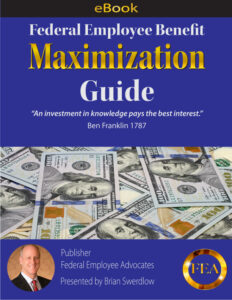
Download my free ebook that shows you how to turbocharge your government retirement benefits and “insure” your retirement.
Click on the photo to access the book.