By Brian Swerdlow
Even younger workers dream of the day when they are no longer bound to a work routine that can be unfulfilling and exhausting. Many Americans under 65 picture a day when they are free from the grind and can explore the world and pursue their passions.
Unfortunately, as many younger Americans watch their parents and grandparents struggle with money issues, they may feel retirement is a pipe dream. For this reason, even though you might be thirty or forty years away from your ideal retirement age, you should consider starting to save right now. I can’t overstate the value of beginning retirement planning when you are still young.

Time can be your friend or your enemy.
Time is your most valuable commodity when saving and growing your wealth. The earlier you begin saving and investing, the more time your money has to take advantage of compound interest. When you put off retirement planning until later in life, the financial responsibilities that pile up can make it much harder to save enough for retirement.
There are many reasons why I encourage my clients and their families to start retirement income plans sooner rather than later. For one thing, it’s typically easier to save more money when you’re young. That’s because you tend to have fewer responsibilities, such as a family, than those you will have in your later years. You may not have purchased a home yet, so you don’t have to contend with a mortgage, repairs and maintenance, and insurance. If you don’t have children yet, you don’t need to plan for college tuition, childcare, and other child-related expenses. Such costs can take a significant bite out of your income when you’re older, leaving you less income for investing and saving. As a younger person planning your retirement, you will typically enjoy greater flexibility with your budget and won’t need to alter your current lifestyle as much.
Another advantage of creating retirement strategies early is that you’ll have more time to tap into the power of compound interest. Compound interest is the concept of earning interest on your initial savings and reinvested earnings. Those who begin retirement planning as soon as they start their careers may have more time to watch their savings grow.
For example, “Mike” is a 25-year-old who saved $300 monthly in a retirement account with an average annual return of 7%. Even if he never increases the amount of money he contributes, he will have approximately $708,242 by age 65.
Contrast Mike with “David,” a 35-year-old who begins saving the same $300 amount at the same annual rate of 7%. By age 65, David’s account will be worth only about $328,988. Mike contributed less over time but ended up with more money than David due to the power of compound interest.

Start early and be open to good advice.
While it’s essential to start saving early, you will still need a well-designed retirement plan. Many younger individuals may not know how to strategize appropriately to achieve their financial goals. Or, they may become confused by the plethora of conflicting and confusing financial advice available online and from parents and friends. In these cases, retirement and income planners can play a significant role.
An advisor, especially an advisor who is a fiduciary, can partner with you to map out a retirement blueprint that aligns well with your risk tolerance, values, and money objectives. Your retirement income planner will provide valuable insights and guidance by thoroughly assessing your financial goals, attitudes, and appropriate investment options. You’ll discover how to prioritize your goals, whether paying off student loans, buying a home, or putting more money into your company’s retirement plan. By partnering with a seasoned professional with your best interests in mind, you will create a personalized strategy to ensure you’re on track for a secure retirement, no matter what the economy is doing.
What to expect when you plan your retirement early.

The pros of planning your retirement as soon as you start your career almost always outweigh the cons. To put this into perspective, let’s examine how much the typical American needs to save to retire comfortably at age 65.
While individual circumstances vary, a general guideline suggests saving at least 10-15% of your annual income for retirement. And, the way the economy is currently going, you might even need to double or triple that amount.
Let’s consider a scenario where a 25-year-old starts saving for retirement to retire at 65. Assuming you make consistent contributions and get around a 7% annual return, here’s what you will need to set aside every month to reach $1 million by age 65:
· Starting at age 25: Approximately $381 per month.
· Starting at age 35: Approximately $814 per month.
· Starting at age 45: Approximately $1,868 per month.
As you can tell, the amount you need to save monthly increases significantly the longer you delay your retirement planning. Starting at age 25 requires you to invest much less every month than you’d need to at age 35 or 45.
Should you have a ROTH or traditional IRA?
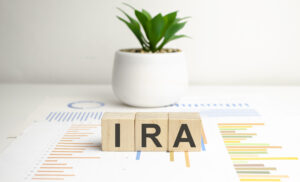
Choosing the correct retirement account type can significantly affect the size of your income stream in retirement. Two popular options for employer-sponsored plans are the Roth IRA and the Traditional IRA.
What are the features of a Roth IRA?
- Contributions to Roth IRAs are made with post-tax dollars.
- You will pay taxes on the money you contribute now. Since taxes are very likely to increase, paying them now might save you money in the long term.
- Earnings in a Roth grow tax-free. Qualified withdrawals in retirement are tax-free.
- With a Roth, you will have no required minimum distributions (RMDs) during your lifetime.
A Roth may be ideal for those expecting to be in a higher tax bracket in retirement.
What do traditional IRAs offer?
- You make contributions to traditional IRAs with pre-tax dollars. This feature lets you deduct your contributions from your taxable income in the year of contribution.
- Earnings grow tax-deferred. However, withdrawals from traditional IRAs are subject to income tax.RMDs are required.
Traditional IRAs may be a good choice if you anticipate being in a lower tax bracket in retirement.
Selecting a Roth IRA or a traditional IRA depends on your current financial situation, tax considerations, and future retirement income expectations. Starting early gives you more time to explore these options and make informed decisions. Planning when you’re young also allows you to consider riskier investments, knowing you’ll have more time to correct any mistakes.
Conclusion:
There is not much downside to considering retirement even before you draw your first paycheck. Perhaps you might decide that it’s more important to have options than to have a lot of material possessions. Starting early almost gives you more options than you’d otherwise have. If you plan correctly, you might be able to retire years before your friends and enjoy your passions while you still have energy and drive. Retirement is not just about setting aside money; it’s about setting yourself up for financial security and peace of mind in your later years.
Starting at a younger age makes saving more manageable, harnesses the power of compound interest, and even lets you take chances and make mistakes with your money, knowing you’ll have time to recover. Whether you seek the assistance of a financial advisor or embark on a self-guided journey, you don’t need to wait to take that first step toward securing a comfortable and fulfilling retirement. Your future self will thank you for it.