

By Sean Sparkman
Since it first hit the financial scene, cryptocurrency has generated strong opinions and more than its share of skepticism.
There is one group of investors who view Bitcoin and other digital currencies as the future of money. Others see cryptocurrencies as little more than a speculative gamble encased in mysterious technological jargon. I believe that somewhere between those two extremes is a more practical and compelling question for retirees and those about to retire:
Should cryptocurrency play any role in a retirement portfolio?
The answer isn’t necessarily yes, but it also isn’t necessarily no. The decision to include crypto in your investment portfolio is like most other investment decisions. Deciding to buy it depends on your goals, your risk tolerance, and perhaps most importantly, how well you understand the financial product you are buying.
For some retirees, a small cryptocurrency allocation could potentially offer diversification and long-term growth. For others, crypto’s attendant volatility and uncertainty may outweigh any possible benefits.
Before deciding whether cryptocurrencies belong in your retirement plan, it helps to understand what they ARE and are NOT.

What IS a cryptocurrency anyway?
Simply defined, a cryptocurrency is a digital asset that exists electronically and uses cryptography and block chain technology to verify transactions. It functions as a type of digital ledger that creates permanent records of transactions while offering a measure of privacy.
Unlike traditional currencies, cryptocurrencies are generally not issued or controlled by governments or central banks, although many countries are exploring the possibility of offering citizens an official cryptocurrency.
The most universally recognized cryptocurrency is Bitcoin, which was introduced in 2009. Bitcoin was designed to allow transactions to occur directly between individuals without requiring a bank or other central authority to verify those transactions. Instead, transactions are recorded on a public block chain that can be viewed and verified by participants throughout the network.
When someone sends Bitcoin, the transaction is grouped with other transactions, verified by network participants, and added to the block chain through a process often referred to as mining.
But as impressive as this technology may be, technology alone doesn’t mean that Bitcoin is something in which you want to invest.
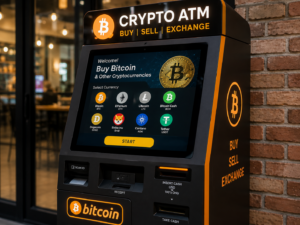
Is Cryptocurrency Actually Money?
This may surprise you, but a lot of economists balk at the idea that cryptocurrency is really money in the traditional sense.
Historically, money performs three important functions:
- It serves as a widely accepted means of payment.
- It acts as a store of value.
- It functions as a unit of account.
While it’s true that cryptocurrencies can be used for payments in some situations, they are not widely accepted for everyday purchases. A crypto’s purchasing power can fluctuate dramatically. For this reason very few goods or services are priced directly in Bitcoin or other cryptocurrencies. Now, this doesn’t mean cryptocurrencies are worthless. It just means they function more like speculative assets than traditional currencies.

Why are many retirees looking into cryptocurrency?
Despite the known and unknown risks, retirees are paying increasing attention to cryptocurrency as a means to insulate their retirement portfolios against things that threaten to erode them. For instance, inflation remains a central cause of financial anxiety.
If you enjoy a retirement lasting 25 or 30 years, inflation may eat away at your savings and use them up faster than anticipated. This situation means you’ll have to make investments that continue growing long after retirement begins.
Some retirees believe Bitcoin’s limited supply could help protect them against inflation in the long run. Unlike government-issued currencies that can theoretically be printed endlessly, Bitcoin is designed to cap at approximately 21 million coins, creating scarcity that makes some people call Bitcoin “digital gold.”

Growth potential is one reason retirees gravitate to digital currencies.
No one buys Bitcoin or other currencies because they’re hoping for a steady 3% annual return. Instead, investors are attracted to cryptocurrency because of its potential for substantial price appreciation.
Retirees who already have sufficient income from Social Security, pensions, annuities, or dividend-paying investments may choose to dedicate a small portion of their portfolio to higher-growth opportunities.
Some see cryptocurrency as a fantastic way to diversify.
Bitcoin usually behaves differently than stocks and bonds. For this reason, a modest allocation may improve portfolio efficiency and resilience. For me, the key word is modest. Diversification is certainly desirable, but you definitely don’t want to put your entire nest egg into one digital basket.

Cryptocurrency risks are real.
The same characteristics that attract investors to an asset can also make it dangerous. Crypto is no exception.
Bitcoin’s volatile history has included extraordinary gains, along with devastating losses. Price declines of 50% or more have occurred multiple times.
Imagine retiring with $1 million and watching a large portion of your portfolio lose half its value in a matter of months. If you’re depending on your savings to generate income, that kind of volatility can be difficult to stomach.
There’s also the fact that cryptocurrency remains a relatively young asset class. Governments around the world continue to debate how digital assets should be regulated. Future legislation, taxation changes, reporting requirements, or restrictions could impact crypto investors.
Perhaps the most challenging crypto shortcoming is that unlike bonds, dividend-paying stocks, pensions, Social Security, or annuities, it does not generate cash flow. The cypto investment thesis relies nearly entirely on price appreciation.
Most retirees want and need reliable, predictable income, not just potential growth.
The Retirement Rule: Income First, Speculation Second
Before considering cryptocurrency, wise retirees should first focus on creating stable income streams. The income foundation might include Social Security, pensions, bond or annuity ladders, dividend-paying investments, rental income, or cash-flowing businesses.
Having these types of assets helps address the most important retirement question for most people. Namely, “How will I pay my bills every month?”
Only after essential expenses are adequately covered should investors ask their advisors about more speculative opportunities.
If a retiree does decide they want crypto, many retirement income professionals suggest limiting cryptocurrency exposure to a relatively small percentage of total assets. Examples might include:
- 0%–2% for conservative investors
- 2%–5% for moderate investors
- Up to 10% for investors with substantial assets and significant risk tolerance
The exact allocation again depends on personal circumstances, goals, risk tolerance, and other critical factors. To gain some clarity, ask yourself this question:
If my cryptocurrency investment lost 50% next year, would it materially affect my retirement lifestyle?
If the answer is YES, you might want to avoid cryptocurrency or severely restrict your allocation.
Do you truly understand cryptocurrency?
The “Oracle of Omaha,” legendary investor Warren Buffet, argued that the greatest danger to portfolios was not market volatility but rather not understanding the thing in which you are investing.
Before spending a single dollar on cryptocurrency, ask yourself a simple question:
Can I explain how it works to someone else?
If you can’t, you may want to reconsider your involvement in crypto.
Some questions to ask yourself include:
✓ What problem is Bitcoin trying to solve?
✓ Why does Bitcoin have value?
✓ What makes a digital currency different from other vehicles?
✓ How are digital transactions verified?
✓ What risks could threaten future adoption?
✓ How do you safely store crypto investments?
I’m not suggesting that you need to learn a lot of arcane terminology or know every single detail about block chain technology. However, I do think you need to grasp the essentials and make informed, rather than emotional, decisions. Many investors buy cryptocurrency because they hear success stories from friends, neighbors, television personalities, podcasts, or social media. They don’t understand the technology well enough to anticipate the downsides they are likely to encounter when they stray from what Buffett calls their “circle of competence.”
Buying something solely because it’s popular is rarely a recipe for long-term success. You want to gain enough knowledge about the asset that you could explain it to a friend or colleague in two minutes or less.
Retirement is generally not a good time to take on costly learning experiences.
Sean’s Summary
Cryptocurrency may be one of the most polarizing investment topics of the modern era.
Supporters see it as digital gold, a hedge against inflation, and an intriguing financial technology.
Critics point to volatility, regulatory uncertainty, and the fact that cryptocurrencies are still not widely accepted as money.
For retirees, the key is understanding the asset thoroughly and balancing potential risks against personal circumstances and preferences.
A small allocation could make sense for investors who understand the risks, have sufficient guaranteed income, and can tolerate significant price swings.
However, cryptocurrency should generally complement and not replace traditional assets that provide retirement income and financial stability.
In the end, successful retirement investing isn’t about chasing the next hot trend.
It’s about building a portfolio that allows you to sleep well at night while providing the income and growth necessary to support the life you’ve worked so hard to achieve.

Sean Sparkman
Pathfinders Wealth (248) 487-9148