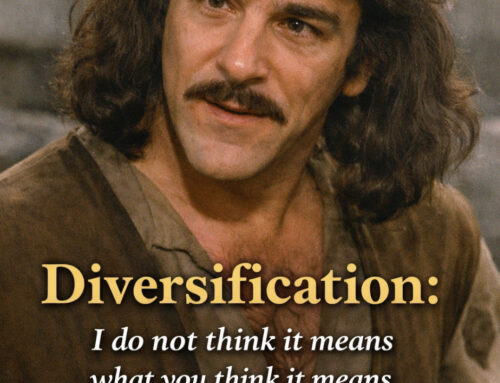

“The current economy is anything but stable, causing many investors to look for”alternative investments” such as metals, real estate, or private equity investments.”
by John Berlet
The challenges of a post-pandemic economy are myriad. Inflation, increasing taxes, stock market volatility, and social unrest are just a few issues we’re encountering in 2023. The constant barrage of bad news is often overwhelming. Relentless reminders of an economy teetering on the brink of possible collapse have many people I know hiding under their desks, waiting for the other shoe to drop. They watch helplessly as inflation, stock market downturns, tax hikes, and other erosive factors decimate their life savings.
If you’ve been investing for a few years, you understand that portfolio diversification is essential to your economic survival in times of uncertainty. Stocks, bonds, and other traditional investments may not adequately provide enough stability and protection to buffer your wealth from economic upheaval. If this is your situation, you might explore the concept of alternative investments and their role in protecting your wealth.
You may think of alternative investments as “exotic.” We’ve all heard of people who invest in llama farms, pork bellies, baseball cards, or other collectibles. However, the broader definition of an alternative investment is any investment beyond traditional stocks, bonds, and cash equivalents.
Alternative investments may encompass a wide range of assets you are already familiar with, including real estate, private equity, venture capital, precious metals, or cryptocurrencies.
Five reasons investors might want to add alternative investments to their portfolios.
They want to achieve greater diversification. One of the primary advantages of alternative investments is that they may help you gain more diversity. When traditional markets experience turbulence, alternative assets may increase your resiliency against such fluctuations. Spreading investments across multiple asset classes could reduce your exposure to any one particular market, thus increasing your chances of preserving your money.
Alternative investments have a low market correlation. Often, alternative investments have a low correlation with traditional asset classes.
Low correlation means the ups and downs of the stock or bond markets have less influence on an alternative investment’s performance. For instance, things such as real estate or precious metals may behave independently of the market. This independence can give you more stability and may reduce the negative impacts of volatility on your wealth.
Alternative investments could generate higher returns. All investments carry a degree of risk. However, alternative investments can sometimes offset such risk by giving investors the potential for greater returns. For instance, investments in startups, private equity, or emerging markets can generate significant profits in the long run. If you add an alternative asset with solid growth potential, you could enhance your overall portfolio returns. This, in turn, increases your ability to preserve your savings more effectively and efficiently.
Alternative investments may be a hedge against inflation. In inflationary times like those we are currently experiencing, alternative assets can serve as a protective hedge. For example, real estate, commodities, and “inflation-protected” securities tend to perform well when inflation spikes.
Alternative investments can be unique and exclusive. Investing in alternative assets can grant you access to unique and exclusive opportunities.
People who enjoy investing love putting money into unique assets that provide diversification and the possibility of high returns. For example, investing in what’s sometimes called a real estate “syndication” can let you participate in tax-advantaged Opportunity Zone projects such as the one I founded in Texas. You might also have a chance to invest in promising startups that aren’t publicly traded.
How do you invest in alternative assets, anyway?
According to some estimates, 80% of Americans with over $1 million in assets put around 26% of that wealth in alternative investments.
And that percentage is growing.
Alternative investments are not just for the uber-wealthy, though. Many middle-income people designated as “accredited investors” choose to participate in what is known as real estate syndications. Syndications are when a group of investors comes together to pool their resources and buy an asset. In syndication, most participants are passive investors, meaning they aren’t involved in the day-to-day operations of the investment. In syndication, the general partners take on the responsibility of running the deal.
The Securities and Exchange Commission (SEC) strictly enforces real estate syndication regulations. For this reason, many syndication deals require you to be an accredited investor. To know if you’re considered an accredited investor, check out the SEC’s website at https://www.sec.gov/education/capitalraising/building-blocks/accredited-investor.
Also, you should note that you’ll typically see a syndication labeled as either a 506(b) or 506(c) offering. There are critical distinctions between these two types of deals. Here is a helpful chart outlining the main differences between a 506(b) and 506 (c) syndication.
While real estate is undoubtedly one of the most stable and popular choices for alternative investment, there are other options. For instance, if your neighbor started a tech company and you put money into that venture before it became publicly traded, you’ve just made an alternative investment.
Niche assets are another type of alternative investment. While niche assets are not as popular as primary assets such as real estate, they are attractive to some people because of their potential for high returns. With the chance for high returns comes risk, however. For instance, oil and gas are considered niche assets. But, their volatile prices and regulatory risks are something you must seriously consider before investing.
Finally, as mentioned, there are collectibles and so-called “next-gen” assets such as cryptocurrencies and non-fungible tokens (NFTs).
Summing it up: While many people think that investing in apartment complexes, resorts, or fine art is only for the super-wealthy, this is a myth. Every day, middle-class Americans discover ways to put their money into exciting and potentially lucrative projects. Whatever you decide, you must discuss your unique situation with a qualified financial professional before making any decisions.
Building massive, sustainable wealth or even protecting what you already have requires a different way of thinking in 2023. You and your advisor may want to explore switching to alternative assets as your primary target or adding them to your portfolio to achieve more diversity.
PS: If you are an #accredited investor looking for unique real estate investment opportunities, check out this investors-only webinar on June 21st. Discover more details here:
https://register.gotowebinar.com/register/3467247677362384733
*This article and all content on this site are for informational and entertainment purposes only. You should not consider any of this information or other material to be legal, tax, investment, financial, or other advice. Nothing contained in this article or on the site should be construed as a solicitation, recommendation, endorsement, or offer by the author, Safe Money Trends, or any third-party provider to buy or sell any financial instruments.