Authored By Katie Benson, Let’s Talk About Annuities
Looking around, you can easily see that design is an inherent feature of the universe, often concealed until our awareness unveils its presence. Design is resident in the grandest entities we encounter and also in the minutest details of our world. It manifests in bottomless ocean canyons and the intricate patterns on a single snowflake.-Katie Benson

As a creative person, I have never thought it much of a stretch to view retirement planning as a perfect blend of art and science. After all, successful safe money planning concerns human beings, who are more than the sum of their balance sheets. While many planners focus exclusively on the more cut-and-dried features of retirement planning, I decided to incorporate artistic design elements and principles into my strategies.
In this article, I’d like to discuss a few essential design characteristics called “elements.” This article is a sneak peek into my mindset and process for helping people discover how to achieve safety, growth, and predictability in their financial lives. In future articles, I will explore how these elements and the tools (principles) used to incorporate them can help retirees create extraordinary lives after leaving the workplace.
Form IS function in retirement planning.
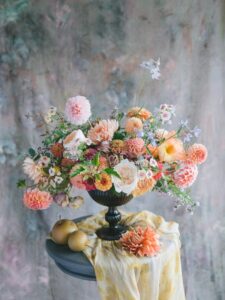
In art, form is a term designating 3-dimensional objects having length, width, and height. Our world consists almost entirely of forms. In floral design, form is the shape and structure of the arrangement.
When talking about retirement, we can equate form to the structure of a financial plan. Just as the form of a floral arrangement sets the foundation for its beauty, the construction of a retirement plan is responsible for its effectiveness. A well-designed retirement blueprint has a clear form outlining asset allocation, income streams, and long-term goals.
Space brings balance
Space describes an area that a shape or form occupies. Space also refers to the background against which we visualize those shapes and forms. I used space in my floral design business to create balance and visual interest. When I help seniors prepare for the retirement stages of their lives, I employ the concept of space to create flexibility. In uncertain, unpredictable times, having the flexibility to pivot and adapt to changing circumstances and needs is critical.
Even the most stunning floral arrangements or paintings can feel cluttered without adequate space.
Without room for adjustments, a retirement plan may become rigid and ineffective. The right amount of space creates breathing room as you enter the second phase of your life.

Textures and patterns give you greater depth and resilience.
As an artist, I employ textures and patterns to add depth and interest to my creations. You can think of a pattern as a design made by repetition of a symbol or motif. A texture describes what is felt by touch. We use smooth, rigid, rough, soft, or similar words to describe texture.
Thoughtfully designed financial portfolios employ different asset classes and risk profiles to serve as their textures and patterns. In safe money planning, texture and pattern correspond to the diversity of assets within a person’s retirement blueprint. This balance and diversity bring retirees greater resilience and peace of mind in a volatile market, smoothing the inevitable bumps.

What color is your retirement plan?
Color is a fundamental aspect of floral design, evoking emotions and setting the tone. In retirement planning, color represents investment choices made within a portfolio. Allocating assets in different “colors” (investment options) can significantly impact the plan’s success. Just as the right combination of colors creates a visually stunning floral arrangement, a well-balanced and diversified portfolio can have spectacular colors that enhance your financial well-being.
Scale matters
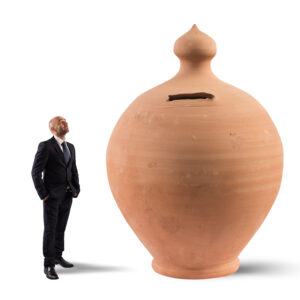
For artists, scale, is a tool associated with size utilized by artists to add emphasis and interest to their designs. The larger or grander an object is compared to others, the more powerful it seems. Size and scale matter in both artistic creation and retirement planning. For example, the size of a floral arrangement often dictates its impact, just as the size of your retirement savings accounts can alter the success of your retirement plan.
If you want to retire successfully, you must take time to assess the size of your nest egg and align it with your realistic money goals. You must tailor your portfolio design to include your current financial situation, goals, and relationship to money.

Will you come out “smelling like a rose”?
Humans have long associated both positive and negative memories with smells. This connection makes its way into everyday conversations with the “sweet smell of success,” or a “fragrant” personality. An adverse situation may “stink,” a salesperson can “reek of desperation.” You may “smell danger” in the air.
While fragrance may not directly parallel retirement planning, it reminds us of the more intangible aspects of art and financial design. The scent of carefully selected flowers in a bouquet provides a positive sensory experience. Planning that accounts for an investment matrix and includes retirement’s emotional and personal aspects is comparable to a delightful, enticing bouquet. You’d probably never want your retirement plan to smell like old gym socks in duffle bag, would you? Thoughtful planning creates a more aromatic post-work life.

Katie’s Conclusions:
Planning for life after work is typically considered a purely scientific and mathematical exercise. However, I believe it can and should be approached as both art and science.
By using some of the more common design elements, including form, space, texture and pattern, color, size, and fragrance, my goal is to take retirees on a creative and artistic journey that will allow them to live their retirement dreams.